By
By Mindfulness activities for kids become an essential part of both classrooms and family life. These activities are not only calming but also help children develop emotional regulation, improve concentration, and build resilience in facing challenges.
According to the American Psychological Association, mindfulness practices can support children’s mental well-being, particularly for those experiencing anxiety, ADHD, or difficulty with self-regulation.
15 Best Mindfulness Activities for Kids
Let’s explore 15 best mindfulness exercises for kids that teachers, parents, psychologists, and therapists can use to nurture emotional growth and social-emotional learning.
1. Deep Breathing with Bubbles
Blowing bubbles is a playful yet mindful practice when guided with intention. Ask children to take a slow, deep breath before gently blowing bubbles, watching how they float, shimmer, and eventually pop.
This activity not only teaches mindful breathing but also provides a visual cue that helps kids stay focused. According to Harvard Health Publishing, deep breathing activates the parasympathetic nervous system, signaling the body to relax and reducing stress levels.
2. Guided Body Scan
This activity invites children to bring awareness to different parts of their body, from their toes to the top of their head. Ask kids to notice sensations such as warmth, tension, or relaxation in each area.
This exercise can be adapted by using imaginative language, such as “shine a light on your feet”. This activity is especially effective for children with ADHD, as it trains sustained attention in a gentle and supportive way.
Also Read: Cognitive Behavioral Therapy Games to Improve Mental Health
3. Five Senses Exploration
This is the simplest yet most powerful mindfulness activities for kids. Ask children to pause and identify five things they can see, four things they can touch, three things they can hear, two things they can smell, and one thing they can taste or imagine tasting.
This activity instantly grounds them in the present moment and helps them move away from racing thoughts or worries. According to the Child Mind Institute, sensory-based mindfulness supports children with anxiety by giving them a concrete way to focus their attention on the here and now.
4. Mindful Walking

Walking slowly and noticing each step can help children regulate hyperactivity. Instead of rushing, encourage children to walk slowly, noticing the feeling of their feet touching the ground and the rhythm of their steps.
This is particularly helpful for kids with ADHD, as it gives them an outlet for movement while still teaching focus. Families can practice this during nature walks, or teachers can integrate it during outdoor recess transitions.
5. Gratitude Journaling
Gratitude journaling helps children shift their focus from what they lack to what they already have. Ask kids to write down or draw three things they are thankful for each day such as playing with a friend, enjoying their favorite snack, or receiving a hug. Over time, this activity can help kids develop a positive mindset and improve emotional balance.
6. Nature Observation
Spending time in nature naturally supports mindfulness. Invite children to sit quietly outside and notice the trees, clouds, or animals. This type of mindful observation deepens their connection to the environment while reducing stress.
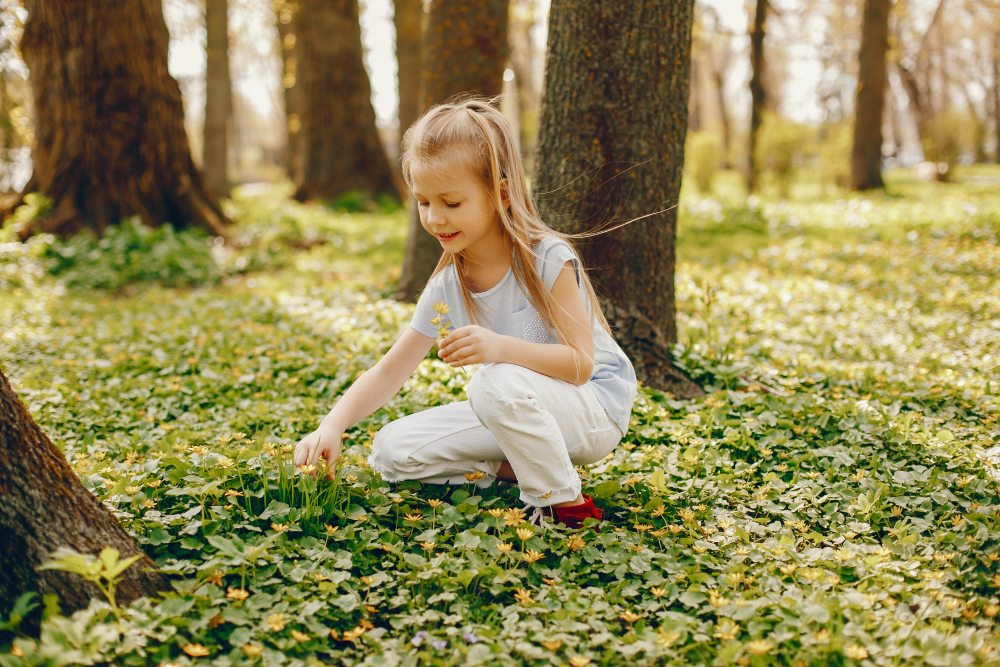
As stated by the National Wildlife Federation, nature-based mindfulness improves mood and attention span in children. For children who struggle with overstimulation indoors, nature observation provides a soothing sensory reset. Families can use this during weekend outings, and teachers can incorporate it into science or outdoor learning sessions.
7. Glitter Jar Meditation
To make this “calm-down jar”, fill a clear jar with water, glitter, and glue or glycerin. When shaken, the glitter swirls around chaotically. This jar represents a “stormy mind”. Watching the glitter settle teaches patience and emotional regulation while they are noticing their own breath.
This visualization helps kids understand how emotions can feel overwhelming but will eventually calm down if given time and patience.
Also Read: How to Mind Your Own Business: Protect Your Mental Health
8. Listening to Calming Sounds
Encouraging children to listen attentively to calming sounds is an accessible way to practice mindfulness. Play nature sounds, gentle music, or even guide them to notice everyday noises.
The goal is to focus solely on listening and letting go of other thoughts. A 2025 study in Frontiers in Psychology found that sound-based mindfulness reduces stress and improves attention, making it an effective strategy in classrooms or therapy sessions.
9. Positive Affirmations
Positive affirmations help children reshape their internal dialogue. Simple statements such as “I am safe”, “I am strong” or “I can try again“ build confidence and reduce negative thinking.
Teachers can introduce affirmations at the beginning of the school day, while parents can practice them with kids before bedtime or during moments of self-doubt.
10. Expressing Emotions Through Drawing

Some children struggle to express feelings verbally, which can lead to frustration or emotional buildup. Mindful drawing gives them a safe outlet to externalize emotions. Ask kids to draw what happiness, anger, or sadness looks like to them using shapes, colors, or abstract designs.
11. Yoga Poses for Kids
Yoga is one of the most engaging mindfulness activities for kids because it combines physical movement with mindful awareness. Simple poses such as “tree pose” (balancing on one leg) or “child’s pose” (resting with forehead on the ground) allow children to connect with their breath and improve body awareness.
Also Read: How to Get Your Mind Off Something and Find Peace of Mind
12. Breathing with a Stuffed Animal
This activity makes deep breathing fun and accessible for younger children. Ask kids to lie down and place a stuffed animal on their belly. As they breathe in and out, the toy rises and falls, giving them a visual and tactile way to practice mindful breathing. Parents can use it as a bedtime ritual.
13. Mindful Storytelling

Storytelling offers children an imaginative way to practice mindfulness. While reading a story, pause at key moments and ask kids to reflect on what emotions the characters might be feeling or what they notice in the details of the scene. This encourages them to slow down, pay attention, and develop empathy.
Therapists often use narrative techniques to help children explore emotions safely. While parents can use bedtime stories as opportunities for mindful reflection.
14. Mindful Eating with Raisins or Fruit

Provide a small fruit, like a raisin, grape, or slice of apple, and guide children to notice its texture, smell, color, and taste slowly. Instead of rushing, they are encouraged to chew carefully and notice every detail. This activity is especially beneficial for children who struggle with self-regulation.
15. Silent Minute Challenge
Though simple, the silent minute is a powerful mindfulness practice. Ask children to sit quietly for one full minute, focusing only on their breath or the sounds around them. For younger children, you can use a timer or a visual cue, like an hourglass.
Teachers often use this between lessons as a “reset button,” while parents can introduce it at home when kids need to calm down after overstimulation.
Also Read: Top 11 Meditation Tools for Beginners to Deepen Your Practice
Why These Mindfulness Activities for Kids Matter
These top 15 mindfulness activities for kids are not just calming exercises. Instead, they’re long-term tools for developing emotional intelligence and focus. Parents can use them at home during bedtime routines, while teachers can integrate them into transitions between lessons.
Therapists may also employ these practices as part of interventions for children with ADHD, anxiety, or emotional regulation difficulties.