By
By Blockchain tech is booming, with the global market expected to hit $1,431.54 billion by 2030. Despite this growth, blockchain still faces security threats. That’s where hashing comes in to create a unique digital fingerprint that makes data tamper-evident. So how does a hash help secure blockchain technology in practice? Read on to know more!
Key Takeaways
- Hashes create unique fingerprints, ensuring blockchain data remains immutable.
- Blockchain nodes verify hashes to prevent unauthorized data tampering.
- Proof-of-Work uses hashing to secure blocks efficiently.
What Is a Hash?

Before exploring blockchain security, know that a hash converts any input into a fixed-length string. Even the smallest change produces a completely different fingerprint. This property shows why hashing prevents blockchain tampering. Thus, data remains secure, and alterations are easily detected.
Furthermore, hashing is deterministic, so the same input always produces the same hash, which allows nodes to verify data without seeing the original transactions. As a result, it protects both authenticity and privacy across the network.
Additionally, hash functions are designed to be computationally one-way, which means they cannot be reversed to reveal original data. This ensures that even if someone obtains the hash output, they cannot reconstruct sensitive information.
So, because collision resistance prevents two different inputs from producing the same output, hashing acts as a cryptographic guarantee of data uniqueness. In turn, the answer to the question ”how does a hash help secure blockchain technology?” becomes clearer as we uncover its cryptographic depth.
Also Read: NFT Use Cases: Exploring How Blockchain Is Redefining Value
How Does Hashing Work?

To see hashing in action, imagine feeding raw transaction data into a hash algorithm. Instantly, the algorithm transforms it into a fixed-size digital signature that captures the exact state of the data at that moment. Understanding this also helps explain how does blockchain work, since each block relies on its hash to link securely to the previous one.
When miners assemble transactions into a block, hashing the content creates a block header that becomes the block’s identity. This process secures blockchain technology, as every block’s fingerprint ensures immutability.
Moreover, each block stores the hash of the previous block by forming an uninterrupted chain. If someone alters historical data, the hash changes and breaks every subsequent link.
Because blockchain nodes constantly compare hashes, the network immediately rejects tampered versions. Thus, hashing is more than a technical tool, as it acts as a consensus guardian that guarantees the integrity of every block across decentralized systems. Its role is crucial for maintaining trust in blockchain networks.
In practice, hashing powers Proof-of-Work, where miners hash block headers until difficulty criteria are met. This secures block creation and blocks unauthorized changes. Moreover, its one-way complexity ensures fairness across the network. As a result, hashing serves as both a security checkpoint and a time lock in blockchain.
Also Read: 8 Web3 Companies Leading the Blockchain Revolution in 2025
How Hash Functions Prevent Data Tampering
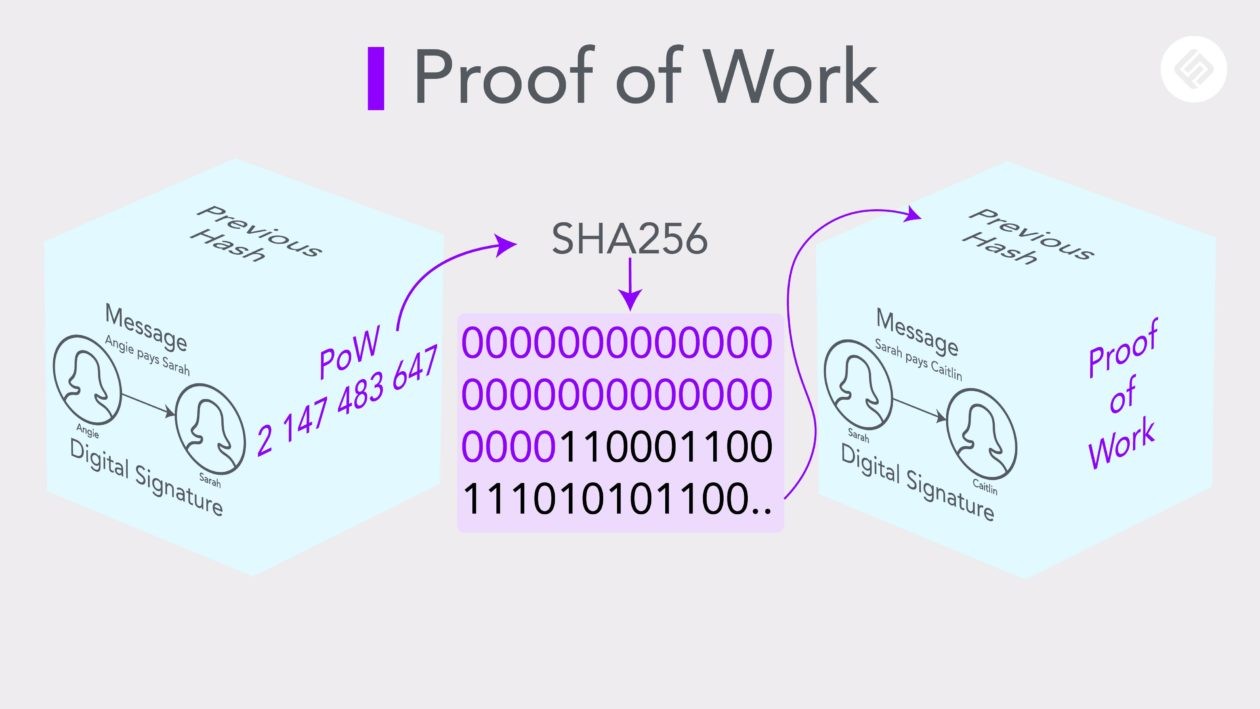
Before going to the core, it’s important to understand that the role of hashing in blockchain security extends far beyond basic encryption. Here’s the explanation!
1. Immutable Block Linking
Each block contains the hash of the block before it, forming a chain that cannot be broken. If a single block is altered, all following hashes instantly become invalid. This structure makes tampering obvious and almost impossible.
2. Avalanche Effect Response
Hashes react dramatically to even the smallest data changes. As a result, nodes can detect inconsistencies immediately without needing to check the original data. This property ensures tampering is caught in real time.
3. Consensus-Level Rejection
Nodes constantly cross-check hashes during validation. Any discrepancy triggers immediate rejection, preventing malicious versions from being added to the blockchain. This keeps the network trustworthy.
4. Proof-of-Work Reinforcement
Creating a valid hash in Proof-of-Work takes huge computational effort. Thus, rewriting history becomes prohibitively expensive for attackers. This mechanism not only secures blocks but also maintains fairness in the network.
5. Cross-Network Replication
Blockchain is stored across countless nodes worldwide. If a hash is changed on one node, it won’t match the majority. Consequently, altered data is automatically rejected to protect the system from unauthorized changes.
Also Read: The Future of Blockchain: Opportunities and Challenges
Popular Hash Algorithms

Since understanding how does a hash helps secure blockchain technology is key, it protects data integrity and prevents tampering. To achieve this, blockchains rely on different hash algorithms, and here are the most widely used!
1. SHA-256
Bitcoin relies on SHA-256, which generates a 256-bit hash. Its strong collision resistance is the key feature that guarantees the security and reliability of the mining system. This algorithm ensures data integrity and security across the network.
2. SHA-512
SHA-512 produces a 512-bit hash, offering even stronger cryptographic security than SHA-256. It’s often used for high-security applications where extra hash length reduces the risk of collisions.
3. Keccak-256 (SHA-3 Variant)
Ethereum uses Keccak-256 because of its unique sponge construction. This design provides extra protection against length-extension attacks. As a result, it strengthens Ethereum’s blockchain reliability.
4. RIPEMD-160
RIPEMD-160 is often paired with SHA-256 for Bitcoin addresses. By combining these measures, transactions gain multi-step protection.
5. Blake2b / Blake3
Modern blockchains favor Blake2b and Blake3 due to their speed and efficiency. They consume less power while maintaining robust cryptography, a necessary factor for supporting highly scalable systems.
6. Scrypt
Litecoin implements Scrypt to resist ASIC mining dominance. Its memory-hard functions promote decentralization by allowing broader participation in mining networks.
7. Whirlpool
Whirlpool generates a 512-bit hash using a block cipher-based design. Its complexity makes it highly resistant to attacks, which is why some blockchain projects use it for enhanced data protection.
8. Tiger
Tiger is optimized for fast hashing on 64-bit platforms. Its speed and efficiency are suitable for blockchain systems that require rapid verification without sacrificing security.
9. MD5
Although less secure today, MD5 is still used for non-critical blockchain tasks like file integrity checks. Its simplicity and speed allow quick verification, though it’s not collision-resistant.
10. SHA-224
Last but not least, we recommend SHA-224 as a truncated version of SHA-256, producing a 224-bit hash. It serves systems where efficiency matters most by balancing strong security with concise hash outputs.
Also Read: Breaking Down How Automated Testing for Blockchain Works
Empower Your Blockchain Insights with Hash Knowledge
In short, understanding how does a hash helps secure blockchain technology lies in its ability to give each block a unique fingerprint. Any change breaks the chain, thereby protecting the integrity of transactions and ensuring tamper-proof records across the network.
Additionally, hashes support consensus mechanisms and Proof-of-Work to prevent unauthorized changes. They maintain consistent records across all nodes and securely link blocks. In this way, blockchain becomes reliable and trustworthy for users everywhere.