By
By Master of Code stated that, according to a Statista report, 84% of e-commerce businesses are either actively working on or have AI as a top priority. This widespread adoption is fueled by the emergence of AI tools for e-commerce that streamline operations and offer a unique experience for every customer.
Key Takeaways:
- AI is now a foundational technology for modern e-commerce that drives efficiency and personalization.
- AI tools for e-commerce empower businesses to move beyond broad customer segments to deliver unique, one-on-one shopping experiences.
- The most impactful AI tools work behind the scenes to streamline logistics, optimize pricing, and automate content.
- The key to leveraging AI is to start small by implementing a tool that addresses a specific pain point and then build on that success over time.
10 AI Tools for E-Commerce for Experience and Productivity
The following list shows how brands are responsibly utilizing AI to transform sales and build customer loyalty, from intelligent chatbots to dynamic pricing engines.
1. Clerk.io

Clerk.io is an AI personalization platform optimizing the e-commerce journey with a single integration. Its smart search and product recommendations increase average order value, while its AI email tool automatically sends personalized, in-stock suggestions to boost conversions.
This is an out-of-the-box and cookieless solution, offering data-driven results for your brand.
Also Read: 10 Most Surprising Artificial Intelligence Experiments Ever
2. Algolia

Replacing frustrating, slow search bars, Algolia comes in as the must-use AI tools for e-commerce to drive sales with an API-first search and discovery platform. It uses AI to instantly understand user intent and typos, delivering highly relevant and personalized results.
Algolia’s powerful analytics and merchandising controls allow businesses to optimize for key metrics, including profitability, transforming on-site search into an intuitive and effective discovery experience.
3. Lyro by Tidio

Providing round-the-clock customer support is a major challenge for many e-commerce brands. Lyro by Tidio solves this with a powerful, AI-driven chatbot powered by the Claude model. It enhances the customer experience by handling most repetitive queries across chat, email, and social channels.
By continuously learning from every interaction, Lyro improves its effectiveness over time, reducing the load on your support team and helping prevent cart abandonment.
4. Manychats

As a no-code automation platform for messaging apps, ManyChat transforms conversations into sales. It streamlines customer experience by instantly answering queries, managing orders, and delivering personalized offers.
Its “Growth Tool” and “Live Chat” features are unique abilities to convert social users into leads and provide a seamless human handoff, ensuring businesses never miss a conversion opportunity.
Also Read: 150 Artificial Intelligence Project Ideas for Tech Solutions
5. Shopify Magic and Sidekick AI Tools for E-commerce Brands
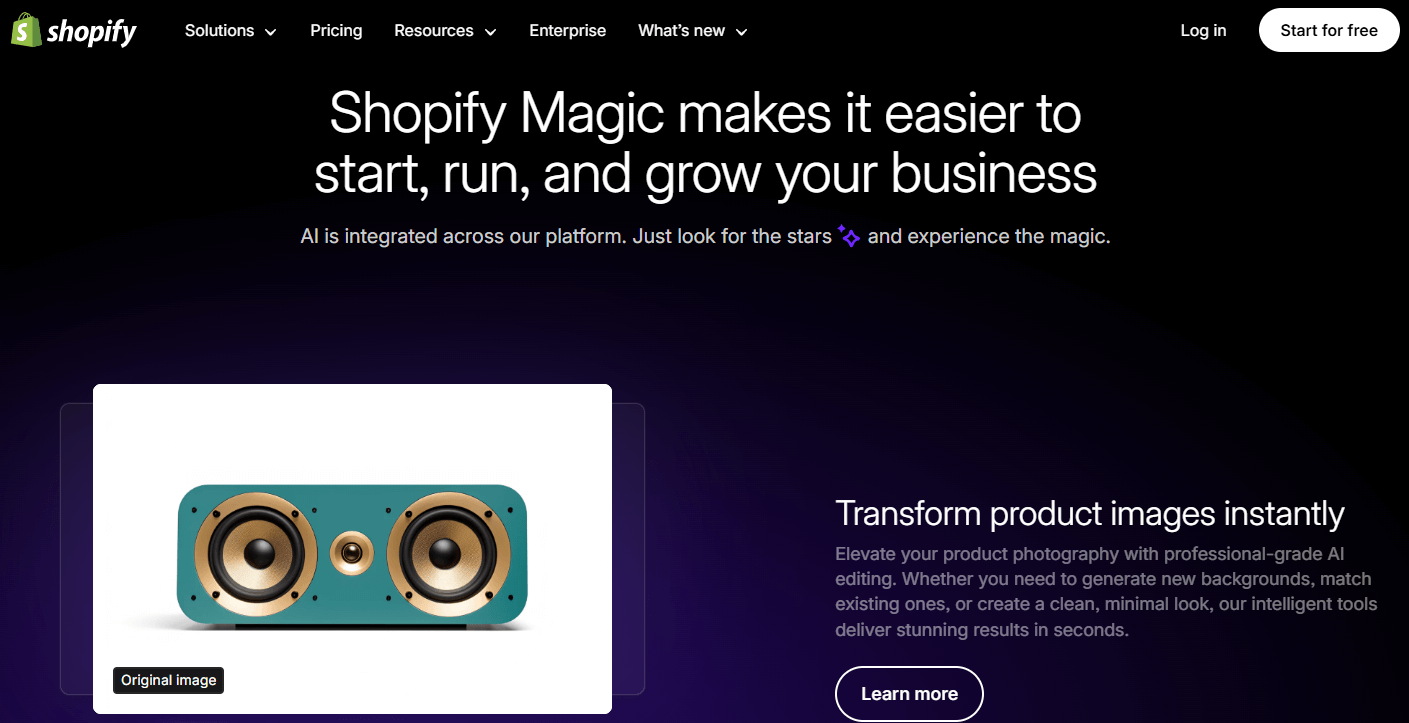
Shopify offers Shopify Magic, a suite of AI tools built directly into the Shopify platform to streamline content creation and store management.
With generative AI for text and image editing, it helps merchants effortlessly produce professional product descriptions, email content, and marketing materials. This integrated approach allows business owners to save valuable time and focus on strategic tasks rather than repetitive workflows.
Sidekick, a promising AI assistant within the Magic suite, takes this further by providing tailored insights, executing tasks, and helping merchants manage their stores using simple text commands.
6. Jasper

Adopting OpenAI’s GPT-3 AI model, Jasper empowers e-commerce teams in creating content at scale without sacrificing quality. It automates a wide range of content creation tasks, be it product descriptions, blog posts, or marketing copy, and can be trained to match your brand’s unique voice.
The platform’s ability to turn a single brief into a multichannel campaign, coupled with its SEO integration with Surfer SEO, ensures that all your content drives organic traffic and boosts conversions.
7. Prisync
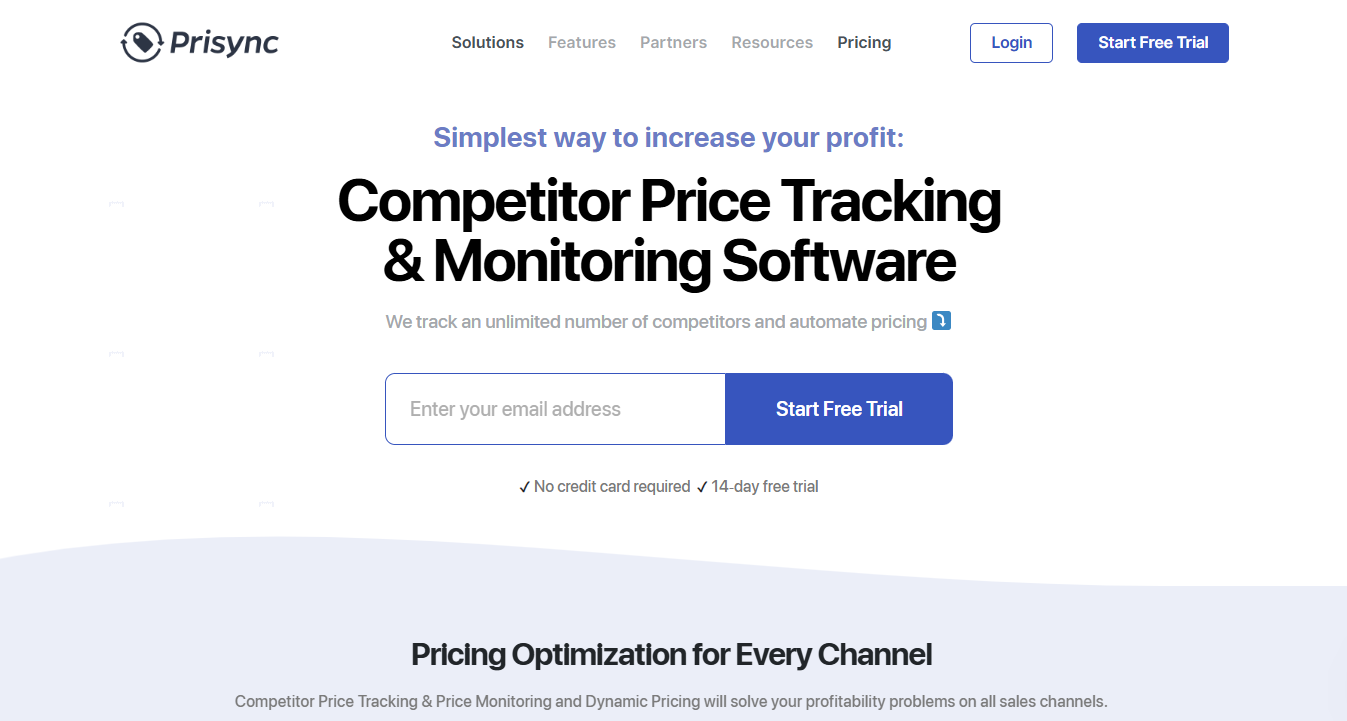
Prisync is among the list of AI tools for e-commerce business that specifically empowers brands with a comprehensive pricing strategy for every channel. It helps you automatically track competitors and market changes in real time, allowing for automated dynamic pricing adjustments.
This removes guesswork from your pricing, ensuring your brand maximizes profitability and stays ahead of the competition across all sales channels. The platform provides a data-backed approach to pricing, helping your business to react to a high-stakes market.
Also Read: 10 Best Sales Reporting Software for Smarter Business Decisions
8. ShipStation

ShipStation is a cloud-based shipping platform that streamlines fulfillment for e-commerce brands of all sizes. Powered by AI, this tool for e-commerce shipping and fulfillment integrates with over a hundred carriers and platforms to make the entire shipping process efficient and cost-effective.
Along with automating order imports and providing real-time tracking, ShipStation also frees up valuable time managing your shipping orders. Its ability to compare carrier rates helps businesses reduce costs, while branded tracking pages and automated notifications improve customer satisfaction.
9. Salesforce Einstein

Navigating the complexities of inventory and supply chains can feel overwhelming. Salesforce Einstein’s AI transforms this chaos into a data-driven strategy by forecasting demand and optimizing inventory, minimizing both stockouts and excess supply while identifying the most cost-effective shipping routes.
This provides real-time insights that drive efficiency and ensure the right products are in the right place. As it’s also integrated with AI-powered CRM, it becomes one of the best AI tools for e-commerce that will lead your streamlined operations to improved customer satisfaction and long-term business growth.
10. Breeze by HubSpot

HubSpot Breeze transforms sales teams by integrating AI directly into the CRM, turning a generic AI into a personalized sales assistant. Breeze Intelligence provides crucial insights by enriching CRM data and identifying buyer intent, helping sales representatives prioritize the right leads.
The Prospecting Agent then automates personalized outreach, saving valuable time previously spent on manual research. By streamlining these tasks, Breeze enables sales teams to work smarter, not harder, and focus on building pipelines and closing deals.
Also Read: 12 Best Product Management Software with Next-Gen Features
Becoming E-Commerce Industry Leaders with AI Tools for E-Commerce
The tools we’ve explored demonstrate AI as a present-day necessity for any e-commerce brand committed to growth.
It’s safe to say that the true AI power and utilization create an intelligent e-commerce ecosystem where every customer interaction, every marketing dollar, and every operational decision is optimized for maximum impact.
By embracing these technologies, business owners can move from adopting to optimizing AI powers, going beyond simply competing, and begin to shape the future of e-commerce business.